

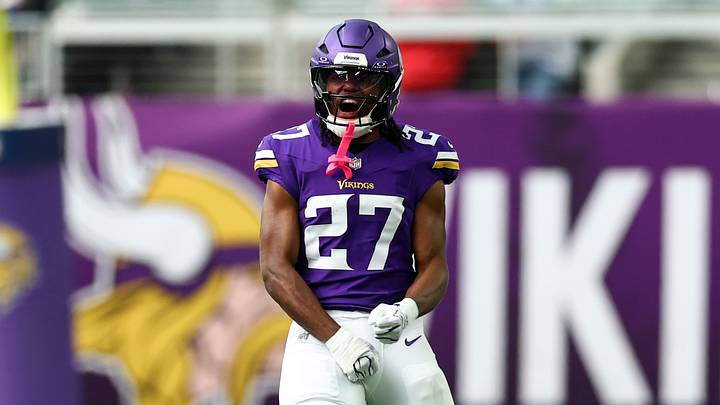
Jordan Mason already looked like the Minnesota Vikings' preferred workload back in their Week 7 win over the Colts, and that was true before Aaron Jones aggravated his left knee in the fourth quarter.
Mason played 38 offensive snaps to Jones' 15 and handled 15 carries for 68 yards, compared with eight carries for 26 yards for Jones. Because Jones didn't leave until after a 17-yard run late in the game, the lopsided workload can't simply be explained away as Mason replacing an injured teammate.
Jones being considered day-to-day is encouraging, but it sharpens the backfield question. Minnesota may have already decided Mason should handle most of the rushing volume while Jones works in a lighter, more specialized role.
Minnesota Vikings already treated Jordan Mason like their lead workload back
Mason's return made Minnesota's preference fairly obvious. He hadn't played since suffering a hand injury in Week 1, yet Kevin O'Connell immediately gave him 15 carries while Jones remained available for most of the afternoon.
Jones carried a much heavier workload while Mason was sidelined, which makes the Week 7 split look more like a deliberate redistribution of touches. The Viking Age noted Mason's emergence as the lead runner against Indianapolis, but Sunday's usage suggests the shift was more than a response to Jones getting hurt.
The Vikings entered the season intending to rotate both backs and keep them fresh. The team's site detailed that plan when Mason returned to practice, after Jones had logged 85 carries for 370 yards during Mason's four-game absence.
A rotation doesn't necessarily mean an even split, though. Mason is the more natural option for repeated downhill work between the tackles, where his size and contact balance can keep Minnesota on schedule. Jones still gives O'Connell value as a receiver, an outside runner, and a veteran who can threaten defenses in several personnel packages without needing 20 carries.
Mason also gave Minnesota the better rushing production against Indianapolis. He got 68 yards on 15 attempts, while the Vikings struggled to move the ball up front, and the team still finished with 136 rushing yards.
Minnesota could still return to a more balanced rotation once Jones is fully healthy. Mason returned fresh after missing four games; Jones had already dealt with a knee injury earlier in the season, and Indianapolis may have presented specific run-game matchups that Minnesota wanted Mason to attack.
A trip to Detroit on November 1 should better test whether this was matchup-specific or the beginning of Minnesota's preferred backfield structure. Even if Jones is cleared to play, the Vikings now have a reason to let Mason take on more of the rushing work while preserving Jones for the touches that best suit his skill set.
 Add us as a preferred source on Google