

The Minnesota Vikings are trying to win the NFC North on a budget. Whether they can pull it off depends on two of the most creative minds in the NFL.
In an ongoing series on my Substack, I am evaluating how teams devote resources to their rosters, combining veteran cash spending with the annualized value of every player still on a rookie deal using a draft pick valuation tool I created that is designed to put all assets under a single currency.
After all, it all comes down to money in the end with the NFL.
One number per player, one comparable resource value per team. The point is to stop talking about cap charges, which are mostly accounting gymnastics, and start talking about what teams actually commit in real dollars and real draft capital.
The NFC North was the first division through the model. One team did not look like the others.
The gap is real for the Minnesota Vikings and it is large
There are three teams in the division cluster within $16 million of each other in the range of $465 to $480 million. As for the Vikings, they sit roughly $100 million below the Chicago Bears, who are the next-lowest team.
That is not a rounding error. That is a gulf.
Pull it apart, and the picture gets starker. Minnesota ranks 28th leaguewide in cash spending. The Vikings also have the lowest commitment of draft capital in the division, a result of just one Day 2 draft pick across 2023 and 2024 combined.
Every other team in the division has either cash or draft capital working in its favor. Chicago is light on cash but loaded with picks from the Bryce Young trade, the Detroit Lions and Green Bay Packers spend at the top of the league, and Minnesota has neither lever pulled.
This has led me to stake the claim that the Vikings are putting their team together with bubblegum and cheap vets.
How Minnesota got here
This is not an accident. Kwesi Adofo-Mensah struck out in multiple drafts. With a lack of confidence in J.J. McCarthy spurring the signing of Kyler Murray, the Vikings’ 2024 draft now rests squarely on the shoulders of Dallas Turner.
2023 was equally bad. Only Jordan Addison looks to be a key building block. One draft piece per year does not a roster make.
The presumed miss on McCarthy is the backbreaker. The 10th overall pick has a cap-adjusted annualized value of $19.27 million. And that value is probably going to sit on the bench this season.
Even when the Vikings add value to the roster, they aren’t realizing it.
Compounding the issue is the fact that Minnesota isn’t even applying the cash savings of having McCarthy on a rookie deal and Murray on a league minimum contract.
Where the savings went, and where they didn't
Most teams that run lean on quarterback redirect the savings into premium positions. The Vikings did not. Their defensive backfield commits $45 million in total resource value, nearly a 2:1 ratio with Chicago at $86 million.
Byron Murphy is the only defensive back Minnesota is paying real money. Every other piece in the secondary is a scheme-dependent rotational vet or a low-cost rookie. Detroit at $81 million and Green Bay at $67 million both outspend Minnesota on the back end by a wide margin.
This is the Brian Flores roster. Flores has built a track record of pairing creative pressure design with defensive backs who are flawed everywhere except in one or two specific traits, then weaponizing those traits. Murphy gets paid. Everyone else gets schemed.
It is a Moneyball approach in the literal sense. Find the inefficiency, exploit it, and do not pay for what the market overcharges for. Whether it scales against the rest of the league all season is the open question of the Vikings' year.
The coaching premium
All is not lost for Vikings fans. It would not surprise me one iota if Minnesota is competing for the division title come the end of the year despite the lack of resources they have put into their roster.
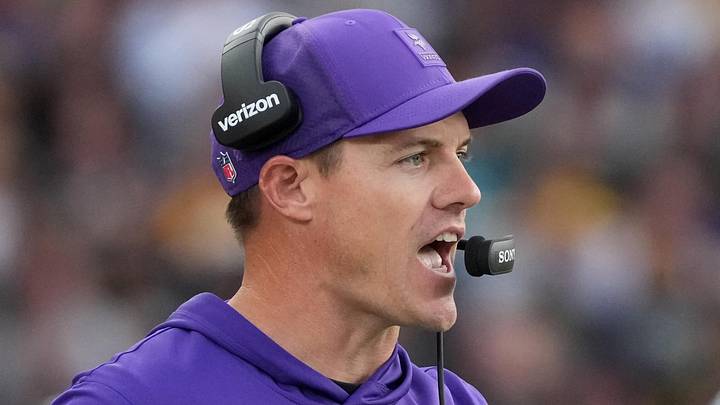
And that’s because Minnesota carries a competitive advantage at the coaching level. Between head coach Kevin O’Connell and defensive coordinator Brian Flores, they have two of the brightest minds in the NFL. And good coaching can paper over bad roster decisions to a degree. How much remains to be seen.
If the Vikings hang in the race with a $100 million resource gap, that says something. Most front offices treat coaching as a fixed cost. Minnesota is in the middle of a natural experiment that may force a reassessment.
The Vikings are trying to win the NFC North on a budget. They are hoping their staff is worth $100 million. That would be a real return on investment.
(This analysis was done before the Lions finalized a contract extension with linebacker Jack Campbell.)
 Add us as a preferred source on Google