

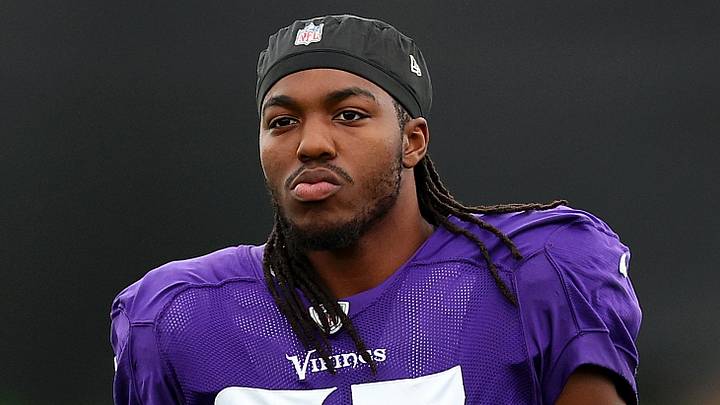
Due to their coaching addition on the offensive side of the ball and how Kevin O'Connell chose to operate last year, the Minnesota Vikings open the 2026 season with more questions than answers at running back.
Aaron Jones and Jordan Mason are listed as co-starters heading into Week 1, but last year’s production supports the argument that Mason should be the primary runner while Jones handles passing situations -- and a reduced rushing workload.
Mason, 27, led Minnesota with 758 rushing yards and six touchdowns on 159 attempts last season. His 4.8 yards per carry comfortably topped Jones’ career-low 4.2, giving the Vikings a factual basis to consider a Jordan Mason breakthrough.
But Jones is 31. It's natural for most backs to slow down at this point in their career, especially one with an injury history. Despite this, he managed to finish with 548 yards on 132 carries in the dozen games he played in 2025.
Minnesota considered releasing or trading him before he accepted a reduced salary, indicating Jones would rather stick with the team that traded for him in 2023 than go elsewhere. The Vikings saw enough value -- particularly as a receiver and pass protector -- to retain Jones. But valuable and featured aren’t necessarily the same thing.
Jordan Mason has earned more work in the Minnesota Vikings' offense
Mason’s limitations explain a lot of why Minnesota wants Jones around. O’Connell has consistently trusted the veteran in high-leverage situations, and Jones drew 41 targets last season to Mason's 16. The 10th-year vet can give Kyler Murray that reliable outlet while recognizing the pressure assignments that can help keep a drive alive.
The rushing work should lean toward the younger Mason. He accounted for just less than half of Minnesota’s 15 rushing touchdowns last season, and his combination of contact balance and short-yardage ability makes him the better fit near the goal line. Minnesota left production unused last season by treating Mason too often as a backup rather than a co-equal option.
That should change under assistant head coach Frank Smith, whose offensive creativity favors the ground game. Minnesota hopes to make an impact with its revamped run-game approach, influenced heavily by Smith. After all, that's why O'Connell brought him on board.
It also helps that the offensive line isn’t undergoing another full reconstruction. Christian Darrisaw, Donovan Jackson, Will Fries and Brian O’Neill return, while Blake Brandel moves into the starting center spot.
Murray’s mobility should naturally force backside defenders to account for the quarterback, hopefully creating cleaner run lanes. Poor blocking -- Minnesota averaged 108.3 rushing yards per game and ranked 23rd last season -- won't be excused.
O’Connell has two useful backs, each with distinct strengths. He should use that to the offense's advantage. Should Mason remain the more productive runner and Minnesota chooses to favor Jones, they'll only be doing themselves in.
 Add us as a preferred source on Google