

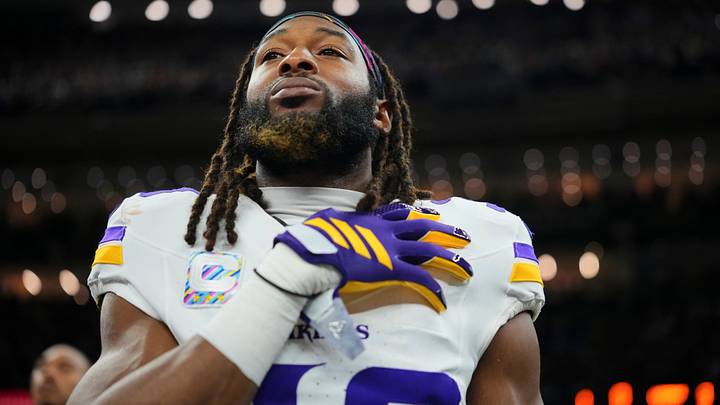
Kevin O’Connell is sticking with the Minnesota Vikings running game through injuries and deficits, and Aaron Jones is doing the heavy lifting. Five games into 2026, the commitment deserves credit. BUT... declaring O’Connell permanently reformed can wait.
O’Connell took plenty of heat last season for abandoning productive runs while his quarterbacks struggled. In January, The Viking Age’s Nik Edlund even argued for a different offensive play-caller, citing that tendency. If we’re going to hammer O’Connell for bailing on the run, we should credit him for sticking with it.
Jones carried 25 times for 113 yards in the 23-13 win over New Orleans despite Minnesota missing Jordan Mason, Christian Darrisaw, Donovan Jackson, and Josh Oliver. Ryan Van Demark and Joe Huber replaced the left side of the line. O’Connell kept asking the replacements to move people.
Jordan Mason’s return to the Minnesota Vikings could ease burden on Aaron Jones
O’Connell’s persistence caught Chip Scoggins’s attention on the Oct. 17 “Purple Daily” podcast episode. “Not only has he not abandoned it, they didn't have the left side of their offensive line on Sunday, and they don't have Josh Oliver,” the Star Tribune columnist said.
Minnesota’s 152 rushing attempts ranked fourth through Week 5, behind Chicago’s 183, Atlanta’s 165, and Baltimore’s 162. That’s 30.4 attempts per game, compared with 24.1 last season. O’Connell’s offenses finished 27th or worse in attempts in three of his first four seasons.
O’Connell kept calling runs against Green Bay even while the Vikings trailed. Counting the opener’s official play-by-play, Minnesota’s 34 rushes included three scrambles and three kneel-downs. Remove those, and you're left with 28 called runs, with 23 occurring while Minnesota trailed. A scramble can produce rushing yards from a called pass. Those 23 runs required O’Connell to keep choosing the ground game before he had a lead to protect.
O’Connell called five handoffs on the go-ahead drive that began down 22-17 with 13:11 remaining in the fourth quarter. Three came on first-and-10, including Mason’s 28-yard gain. Three Packers penalties on third down helped keep the possession alive, so the running game doesn’t get all the credit for the comeback.
Minnesota still averages only 3.8 yards per carry, and its 2024 team also started 5-0 with 142 rushing attempts through five games. Ten additional attempts aren’t proof of a coaching transformation. Depleted personnel and willingness to run while chasing Green Bay make a stronger case.
Rookie lineman Caleb Tiernan also reported eligible against Miami to help replace Oliver’s blocking. Using an extra lineman gives O’Connell another way to maintain heavier formations when his top blocking tight end is unavailable. That adjustment matters because the bye won’t fix every absence. Jackson’s knee injury is expected to end his regular season.
Jones needs help carrying this commitment into November. He’s taken 85 carries in four games without Mason and was the only Vikings running back with a carry against the Saints. He left that game with a knee injury before returning. His 4.5 yards per carry against New Orleans rewarded O’Connell’s persistence, but that distribution asks a lot of one back.
O’Connell hopes to have Mason back after the bye, with Indianapolis next in Week 7. His return needs to reduce Jones’s workload while keeping a dependable option on early downs. Maintaining the run against a deficit with both backs contributing would be a more useful sign of lasting change than another week of Jones handling every running-back carry.
 Add us as a preferred source on Google