

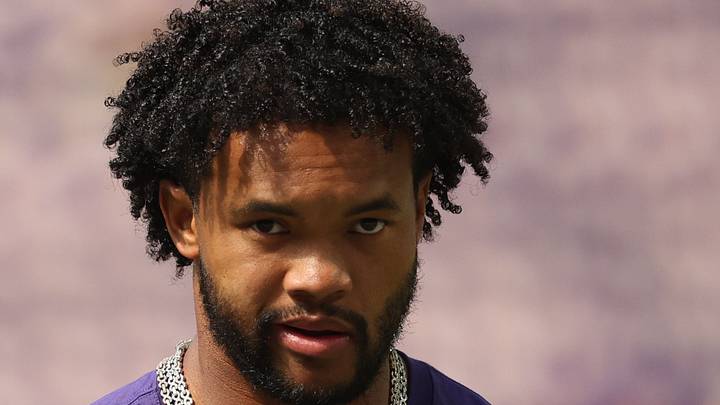
Green Bay Packers safety Javon Bullard somehow escaped a fine for what can only be called a late and excessive hit that ended Kyler Murray's regular-season debut for the Minnesota Vikings after just 11 snaps, according to ESPN's Rob Demovsky. Murray had reached the end of a run and already slid when Bullard delivered the blow.
Bullard drew a worthy 15-yard unnecessary roughness penalty and really could've been ejected, but he wasn't. ESPN's Adam Schefter quickly suggested a suspension wasn't coming. As a first-time offender for helmet-to-helmet hits and similar plays, a suspension would've been a step too far in this case.
Before Saturday, though, a fine seemed certain, as Schefter also noted. The only question was how much it would be.
NFL's Javon Bullard decision makes its player-safety stance ring hollow
Based on history and the league office's general randomness with fines, it felt certain that the Vikings and their fans would be left unsatisfied with whatever financial hit Bullard took. Even that cynical expectation proved optimistic.
One of the two Packers fined in Week 1 was Lukas Van Ness; the other was a close defender on the Murray play. His fine stemmed from a hit on Carson Wentz later in the game.
Two Packers were fined from the Week 1 game vs. Minnesota:
— Rob Demovsky (@RobDemovsky) September 19, 2026
Lukas Van Ness: $17,911 for a hit on the QB — but apparently not the one on Kyler Murray. According to the NFL it was for a third-quarter hit on Carson Wentz.
Evan Williams: $7,087 for a hit on a defenseless player.…
After Sunday's game, Vikings right tackle Brian O'Neill regretted not retaliating more harshly against Bullard immediately afterward. A day later, believable or not, head coach Kevin O'Connell said he carried no ill will toward Bullard or Van Ness.
It now looks like O'Neill did what he thought he should, but the consequences got in the way.
The NFL has offered plenty of signs that it couldn't actually care a whole lot less about player health and safety, with games scheduled on every day of the week it can manage, an increasing inventory of international games no one asked for, etc.
That broader pattern is bad enough. Here, the league had a clear opportunity to back up its player-safety messaging and failed.
Without meaningful consequences to deter reckless plays, the league's supposed commitment to protecting players rings hollow. It also puts other quarterbacks in danger, and no one wants that.
 Add us as a preferred source on Google