

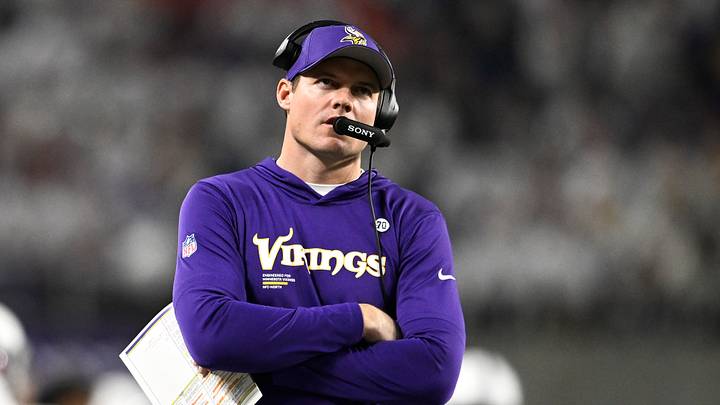
Kevin O’Connell’s offensive philosophy deserves closer scrutiny after the Minnesota Vikings wasted a defensive effort good enough to beat almost anybody in a 19-15 loss to the Detroit Lions on Sunday.
Brian Flores’ defense held a Lions team that entered Sunday averaging 30.7 points per game to 19. Minnesota still lost because its offense produced 15 points, 266 net yards, and only 50 plays. The Vikings converted three of 10 third downs and failed on their lone fourth-down attempt, according to the official Vikings game recap.
The season-long debate over how much O’Connell has adapted to Kyler Murray is still very much alive. Minnesota’s early Murray fit questions were always about whether O’Connell would modify an offense built around longer-developing progression concepts. He has changed. The Vikings have used more shotgun, leaned harder on the run, and tried to protect games instead of asking Murray to carry the offense.
Kevin O’Connell’s conservative approach with Minnesota Vikings offense showed its ceiling against Detroit Lions
Detroit exposed the downside of that conservative identity. Minnesota held the ball for only 24:17, generated two red-zone trips, and spent too many possessions trying to create difficult third downs instead of attacking favorable situations.
O’Connell’s broader tendencies show legitimate adaptation. Current NFL offensive tendency data shows Minnesota using shotgun on more than half its snaps while leaning heavily on play action. The problem is what those choices ultimately produce. Minnesota’s offense needed fuller diagnosis even during its unbeaten start because protecting Flores’ defense only works when possession football eventually becomes touchdown football.
Jefferson’s usage should bother Vikings fans most. He finished with five catches for 33 yards on nine targets, but only one target came after halftime. That cannot happen in a four-point divisional loss. Jefferson doesn’t need a forced deep ball every series, but Minnesota should have more ways to isolate him, use motion to expose coverage, create quick access throws, and get the ball into his hands before the defense can dictate terms.
The red-zone results were actually good. Minnesota scored touchdowns on both trips. A one-yard Jefferson touchdown and an eight-yard Hockenson score showed O’Connell can still create answers in tight space. The failure was reaching the red zone only twice.
Murray also deserves his share of responsibility. His recent progress showed promise before Detroit, and the Vikings didn’t bring him in just to insulate themselves from difficult situations. His interception gave Detroit points before halftime, and Minnesota’s final possession ended with a three-and-out when one sustained drive could have rescued the game.
O’Connell still has a reasonable defense. Murray is learning a new offense, Minnesota has navigated injuries up front, and reducing volatility helped this team start 6-0. There’s value in not asking the quarterback to play superhero every game.
Detroit changed the standard. Flores cannot be expected to hold NFC contenders under 20 while the offense operates primarily to avoid damaging mistakes. Buffalo comes next, and Minnesota may finally have to play a game where 20 points aren’t enough. O’Connell needs an offense that can create those extra points before Flores runs out of ways to hide their absence.
 Add us as a preferred source on Google