

The Minnesota Vikings should treat 2026 like a Super Bowl window that may be much harder to recreate than their 6-0 record makes it seem.
Minnesota isn't built to disappear in January and start over. Justin Jefferson, Christian Darrisaw, Dallas Turner, Byron Murphy Jr., and Joshua Metellus give this roster legitimate long-term pillars.
The Vikings also own substantial 2027 draft capital. But their undefeated start has already turned Super Bowl hopes into a legitimate conversation, especially with a dominant defense that could change significantly after this season.
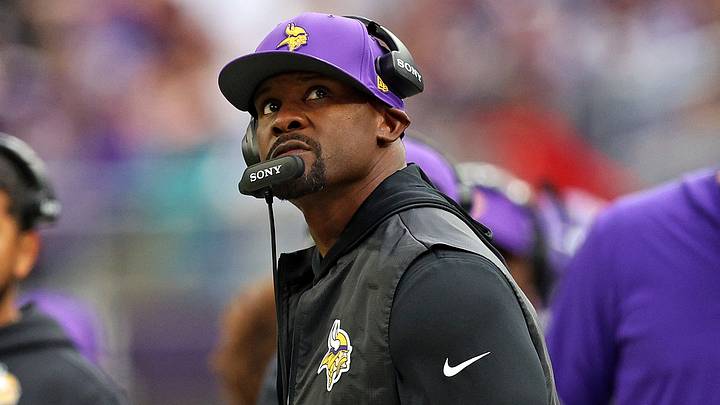
Brian Flores is the biggest reason for urgency. Minnesota extended him in January, but that doesn't prevent another team from hiring him as its head coach. Flores already has NFL head-coaching experience, and another season directing an elite defense only solidifies his candidacy.
Minnesota Vikings defense could lose more than Brian Flores after 2026
Flores has built a defense that allowed 74 points through six games, the fewest in the league, while producing 11 takeaways. That performance hasn't come from lining up in vanilla Cover 3 and asking superior talent to win every snap. Minnesota creates problems through disguise, pressure, and players who can perform several jobs.
Blake Cashman is a perfect example. His range, coverage ability, and communication responsibilities are central to Flores' approach. Metellus can operate as a safety, slot defender, or box player. Andrew Van Ginkel can rush, drop, or attack protections from unusual locations. Harrison Smith remains valuable because he can sell one coverage look before the snap and execute another after the ball is snapped.
Those traits wouldn't become useless under another coordinator. The danger is that Minnesota has collected several players whose versatility becomes especially valuable when Flores is arranging the puzzle.
Age adds another layer. Smith returned at 37 on a one-season deal for 2026. Van Ginkel is 31. Eric Wilson is 32. Kyle Van Noy is 35. A defense can replace individual veterans, but replacing veterans while possibly replacing the architect is a different assignment.
Minnesota also has defensive contracts approaching decision points, including Van Ginkel, Cashman, and Isaiah Rodgers. Keeping every talented veteran isn't realistic indefinitely, especially as younger players will eventually need extensions and premium offensive positions continue eating cap space.
Vikings' quarterback situation makes waiting even riskier
Kyler Murray is playing 2026 on a one-year contract, and J.J. McCarthy is in New York. That means Kevin O'Connell doesn't currently have a young quarterback under team control whom the organization can simply pencil in for 2027.
The McCarthy trade already turned next offseason into another quarterback decision. Murray could earn another deal. Minnesota could pursue another veteran. Nolan Teasley could use an early pick on a quarterback. Every route carries uncertainty that doesn't exist when a team knows who will take the first snap next fall.
The strongest argument against urgency is Minnesota's 2027 draft position. The Vikings currently hold nine selections, including their first-rounder, second-rounder, and two third-rounders, according to the team's official draft inventory. That's enough ammunition to replenish the defense, chase a quarterback, or maneuver around the board.
That draft capital also lets Minnesota be aggressive now. The roster still has identifiable trade-deadline needs despite its 6-0 start, and protecting every future pick would ignore how rare the current setup is.
Flores is here. Smith is here. The defense is suffocating teams. Jefferson remains in his prime. O'Connell has Minnesota unbeaten despite an offense that hasn't reached its ceiling.
Nobody knows whether Flores leaves, Murray stays, or Minnesota's veteran defenders decline in 2027. That's why 2026 deserves to be treated as precious rather than merely promising.
 Add us as a preferred source on Google