

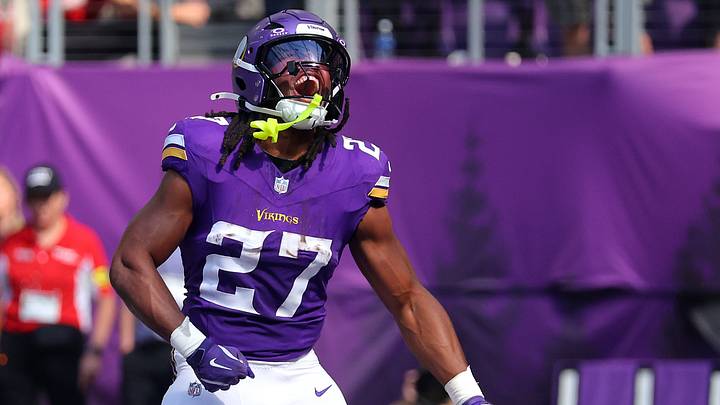
Jordan Mason has been activated from injured reserve, rejoining Aaron Jones Sr. in the Minnesota Vikings’ backfield before Sunday’s matchup with the Indianapolis Colts. Jones finally gets some relief, although Minnesota’s passing problems require more than another running back.
Mason missed four games after fracturing his thumb in Week 1. He completed a full week of practice but remained questionable on Friday’s injury report. Minnesota released DeeJay Dallas that afternoon, opening room on the 53-man roster.
Jones has already logged at least 20 touches in four of Minnesota’s five games. He’s kept the ground game functional without Mason, but asking him to handle that workload indefinitely would waste the reason Minnesota assembled this tandem.
How Jordan Mason helps the Minnesota Vikings manage Aaron Jones
Mason rushed for 758 yards and a career-high six touchdowns in 2025, finishing 31 yards shy of the 789 he gained with San Francisco in 2024. His 4.8 yards per carry last season make him more than somebody who lets Jones catch his breath.
Mason’s downhill style gives Kevin O’Connell a credible option between the tackles and in short yardage. Jones doesn’t need to absorb those collisions every series, especially while playing through an MCL sprain. Minnesota should keep Jones fresher for receiving and pass-protection work.
O’Connell has plenty of reason to keep feeding Jones, even with Mason back. Reducing his workload shouldn’t turn him into a third-down specialist or automatically hand Mason every scoring opportunity. O’Connell can share the early-down work while letting the matchup and game situation determine who handles the most important possessions.
Mason’s own protection remains the catch. PFF charged him with 11 pressures allowed over 65 pass-blocking snaps during the 2025 regular season. That’s a limited sample, but enough to argue against handing him routine third-down duty.
Mason also caught just 14 passes for 51 yards last season. He can punish defenders with the ball and still be the wrong back for a third-and-long protection assignment. Those are different skills, and O’Connell should deploy him accordingly.
Successful early-down runs could leave Minnesota needing fewer yards through the air. That’s useful indirect help for the passing offense, but Mason won’t repair missed blocks or late throws that keep the ball from reaching Justin Jefferson.
O’Connell should also avoid making the substitution itself a defensive clue. Some early-down throws with Mason on the field can keep opponents from treating his presence as a handoff announcement, provided Minnesota designs the protection around what he can handle.
 Add us as a preferred source on Google